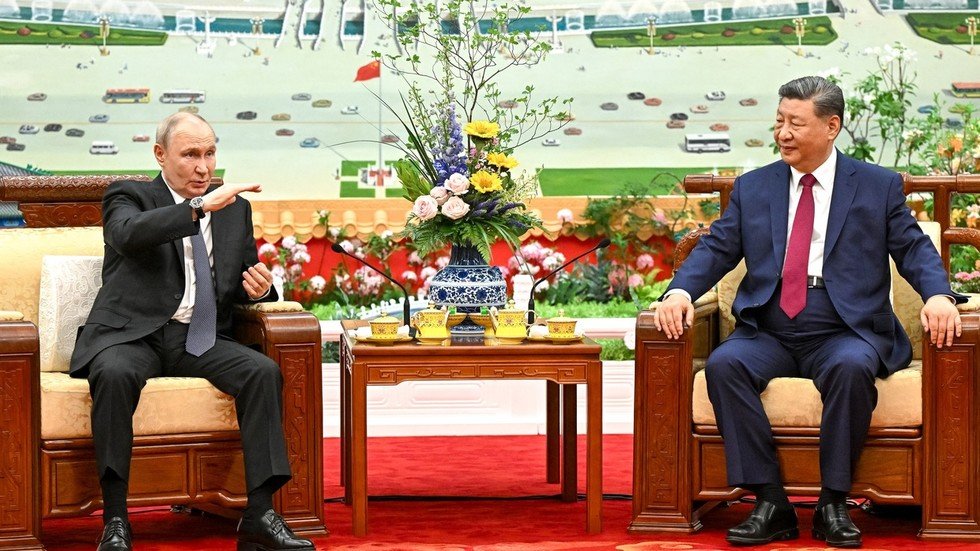
Putin and Xi sign agreements during Beijing visit
AFBytes Brief
Vladimir Putin concluded a visit to Beijing with the signing of numerous bilateral agreements. Both leaders voiced support for a multipolar international system and opposition to unilateral dominance.
Why this matters
Deeper Russia-China coordination can influence global energy markets and supply chains that affect U.S. commodity prices and manufacturing costs.
Quick take
- Money Angle
- Expanded energy and commodity trade between Russia and China may redirect flows away from traditional Western buyers.
- Market Impact
- Oil and natural gas prices could face upward pressure if sanctioned Russian volumes shift toward Asian markets.
- Who Benefits
- Chinese state energy firms secure long-term supply contracts at potentially favorable terms.
- Who Loses
- European importers face tighter global supply as Russian exports reroute eastward.
- What to Watch Next
- Track monthly EIA and IEA reports on global oil trade flows for evidence of redirection.
Perspectives on this story
AI-generated analytical lenses meant to encourage you to think across multiple frames. Not attributed to any individual; not presented as fact.
Household Impact
How this affects family budgets, jobs, and day-to-day life.
Shifts in global energy trade can contribute to volatility in gasoline and heating costs for U.S. households.
America First View
How this lands for readers prioritizing American sovereignty, borders, and domestic industry.
Strengthened Russia-China alignment challenges U.S. efforts to maintain trade leverage and energy export markets.
Institutional View
How established institutions -- agencies, courts, allied governments -- are likely to frame it.
The State Department and Treasury monitor sanctions compliance and secondary effects on allied economies.
Civil Liberties View
How this reads through the lens of constitutional rights, free speech, and due process.
No direct civil liberties issues for Americans arise from foreign bilateral diplomacy.
National Security View
How this matters for defense posture, intelligence, and adversary deterrence.
Closer Russia-China ties require ongoing assessment of combined industrial and military supply chains.
AFBytes analysis is AI-assisted and generated from source metadata, article summaries, and topic context. It is intended to help readers think through implications, not replace the original reporting from rt.com. See our AI and Summary Disclosure for details.