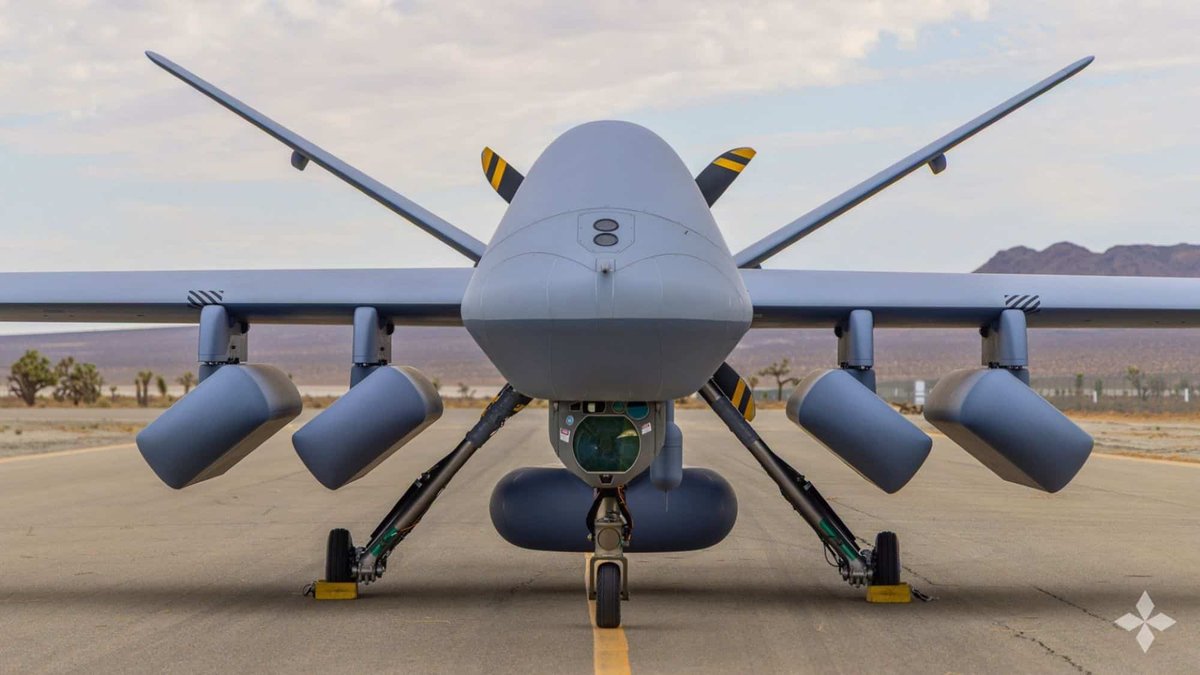
MQ-9B SeaGuardian adds four sonobuoy pods
AFBytes Brief
The MQ-9B SeaGuardian was photographed carrying four sonobuoy dispensing pods, doubling earlier observed capacity for anti-submarine missions.
Why this matters
Expanded drone anti-submarine capabilities affect U.S. naval force structure and defense spending priorities.
Quick take
- Money Angle
- Increased demand for maritime surveillance drones supports revenue growth for manufacturers and related suppliers.
- Market Impact
- Defense contractors in unmanned systems may see contract awards accelerate as ASW roles expand.
- Who Benefits
- General Atomics and U.S. Navy gain operational flexibility from higher sonobuoy payload.
- Who Loses
- Potential adversaries face improved U.S. detection coverage in key maritime areas.
- What to Watch Next
- Watch for upcoming Navy budget documents or congressional hearings on unmanned maritime systems funding.
Perspectives on this story
AI-generated analytical lenses meant to encourage you to think across multiple frames. Not attributed to any individual; not presented as fact.
Household Impact
How this affects family budgets, jobs, and day-to-day life.
Defense procurement decisions influence tax allocations and long-term national security costs.
America First View
How this lands for readers prioritizing American sovereignty, borders, and domestic industry.
Domestic development of advanced drones strengthens U.S. industrial base and reduces reliance on foreign suppliers.
Institutional View
How established institutions -- agencies, courts, allied governments -- are likely to frame it.
The Department of Defense follows established acquisition processes when integrating new payloads on existing platforms.
Civil Liberties View
How this reads through the lens of constitutional rights, free speech, and due process.
Military drone programs operate under separate authorities from domestic surveillance rules.
National Security View
How this matters for defense posture, intelligence, and adversary deterrence.
Improved anti-submarine coverage enhances deterrence and protection of sea lanes critical to U.S. trade.
Adversary View
How foreign rivals are likely to frame this story. Not presented as fact and does not reflect the views of AFBytes.
Chinese defense analysts are expected to cite the upgrade as evidence of growing U.S. undersea surveillance reach.
AFBytes analysis is AI-assisted and generated from source metadata, article summaries, and topic context. It is intended to help readers think through implications, not replace the original reporting from theaviationist.com. See our AI and Summary Disclosure for details.