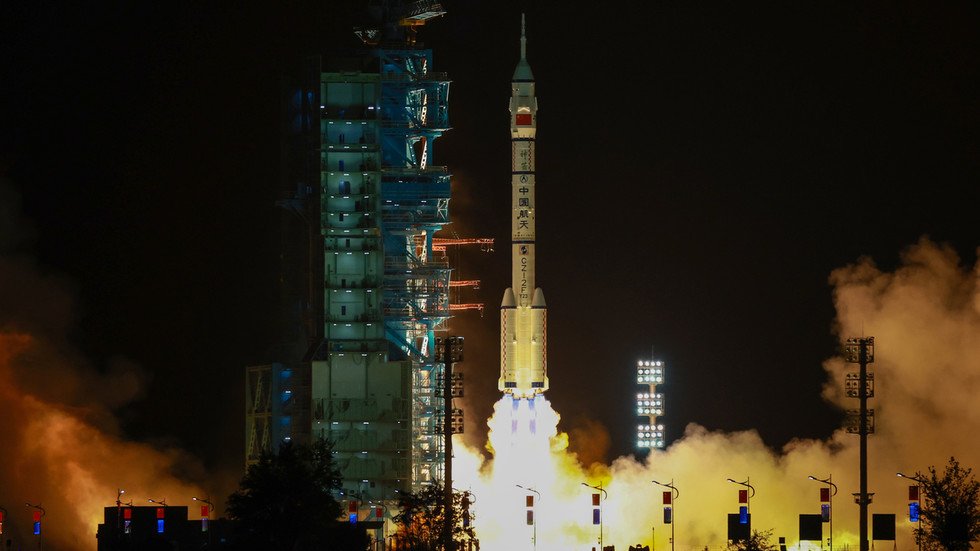
China Launches Year-Long Tiangong Orbital Mission
AFBytes Brief
Three Chinese astronauts have docked with the Tiangong space station. One crew member will remain in orbit for more than a year as China pursues extended-duration flights. The effort forms part of Beijing's broader program aimed at lunar exploration.
Why this matters
The mission advances China's human spaceflight capabilities and extends crew time aboard its orbital station. It signals sustained investment in space infrastructure that could affect U.S. technology competition and future satellite and launch markets.
Quick take
- Money Angle
- National space programs require sustained government funding that crowds out or complements private-sector launch and satellite activity.
- Market Impact
- U.S. and European aerospace contractors may face continued competition in crewed systems and lunar hardware contracts.
- Who Benefits
- Chinese state aerospace entities gain operational experience and data that support future station and lunar projects.
- Who Loses
- International partners outside China's program receive no direct access to the new flight data or station resources.
- What to Watch Next
- Watch for the next crew rotation announcement or any public release of mission duration metrics from Chinese space authorities.
Perspectives on this story
AI-generated analytical lenses meant to encourage you to think across multiple frames. Not attributed to any individual; not presented as fact.
Household Impact
How this affects family budgets, jobs, and day-to-day life.
Public funding for space programs can influence long-term technology spillovers in materials and communications that reach consumer markets.
America First View
How this lands for readers prioritizing American sovereignty, borders, and domestic industry.
Independent U.S. space capabilities remain central to maintaining technological leadership and reducing reliance on foreign orbital infrastructure.
Institutional View
How established institutions -- agencies, courts, allied governments -- are likely to frame it.
Space agencies evaluate missions according to safety records, engineering milestones, and compliance with international debris and frequency regulations.
Civil Liberties View
How this reads through the lens of constitutional rights, free speech, and due process.
National space programs raise questions about transparency of government-funded research and the balance between security classification and public access to results.
National Security View
How this matters for defense posture, intelligence, and adversary deterrence.
Extended crewed operations contribute to experience in rendezvous, life support, and orbital logistics that support broader defense and surveillance architectures.
AFBytes analysis is AI-assisted and generated from source metadata, article summaries, and topic context. It is intended to help readers think through implications, not replace the original reporting from rt.com. See our AI and Summary Disclosure for details.