EU Ukraine funding enters new phase with Russia pressure
AFBytes Brief
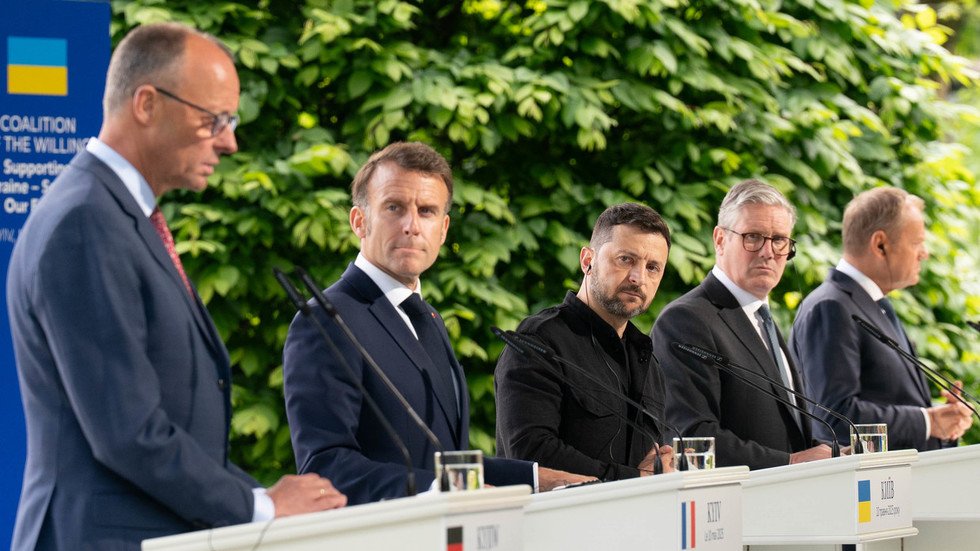
Western Europe maintains financial support for Ukraine's defense. Moscow treats advances on the front and nuclear signaling as leverage in any future settlement talks.
Why this matters
Continued European aid to Ukraine shapes U.S. foreign policy commitments and defense budget priorities.
Quick take
- Money Angle
- European fiscal outlays for military aid affect overall budget balances and potential demand for U.S. weapons systems.
- Market Impact
- Defense contractors with NATO exposure could see sustained order flow if aid packages remain elevated.
- Who Benefits
- U.S. arms manufacturers gain from European demand for compatible munitions and platforms.
- Who Loses
- European taxpayers absorb higher defense spending that could otherwise support domestic programs.
- What to Watch Next
- Monitor upcoming EU Council meetings and any supplemental U.S. aid requests for timing signals.
Perspectives on this story
AI-generated analytical lenses meant to encourage you to think across multiple frames. Not attributed to any individual; not presented as fact.
Household Impact
How this affects family budgets, jobs, and day-to-day life.
Elevated defense budgets in allied nations can indirectly pressure energy and commodity prices.
America First View
How this lands for readers prioritizing American sovereignty, borders, and domestic industry.
European self-funding of Ukraine support reduces immediate U.S. fiscal exposure.
Institutional View
How established institutions -- agencies, courts, allied governments -- are likely to frame it.
EU institutions emphasize treaty-based decision making and coordinated sanctions regimes.
Civil Liberties View
How this reads through the lens of constitutional rights, free speech, and due process.
Prolonged conflict raises questions about displacement policies and refugee protections.
National Security View
How this matters for defense posture, intelligence, and adversary deterrence.
Nuclear rhetoric from Russia requires continuous monitoring by U.S. and NATO intelligence.
AFBytes analysis is AI-assisted and generated from source metadata, article summaries, and topic context. It is intended to help readers think through implications, not replace the original reporting from rt.com. See our AI and Summary Disclosure for details.
Discussion on
Trending posts from X.
‼️Zelensky: Ukraine is defending all of Europe from Russia, therefore it deserves equal rights in the EU
— NEXTA (@nexta_tv) May 23, 2026
In this way, he spoke out against Friedrich Merz’s initiative on partial admission of Ukraine to the European Union.
According to Zelensky, it would be unfair for Ukraine to… pic.twitter.com/Q1d9bPv3o9
The last 3 major market crashes all coincided with CPI crossing above 3.8%.
— Bull Theory (@BullTheoryio) May 24, 2026
Dot-com: −49%.
Financial crisis: −57%.
2022 rate hike selloff: −25%.
CPI is approaching that level again and S&P is sitting near all time highs. pic.twitter.com/qOLDdF8eHJ
Gen. David Petraeus, former CIA Director and former CENTCOM Commander on the new reality of the Russia-Ukraine war:
— Anton Gerashchenko (@Gerashchenko_en) May 25, 2026
"Ninety percent of the casualties on the Russian side are caused by drones.
Ukraine is going from 3.5 million drones manufactured last year to 7 million this… pic.twitter.com/PGSJO1O4Um
No EU membership for Ukraine; not even a quarter of one percent sliver of GDP from the rich European pie for Ukraine. Aside from that, Europe is bravely prepared to fight to the last Ukrainian male (and we're rapidly approaching that last Ukrainian male)https://t.co/TtlsELhzPy
— Mark Ames (@MarkAmesExiled) May 24, 2026
On this day in 1844, Samuel Morse sent the message "What hath God wrought" from the U.S. Capitol to a railroad depot in Baltimore over the first long-distance telegraph line. The demonstration itself was a political stunt to secure more federal funding. The financial consequences… pic.twitter.com/9Sq1NvV7ms
— Kurt S. Altrichter, CRPS® (@kurtsaltrichter) May 24, 2026